How to Get Rid of Brown and Green Algae in an Aquarium
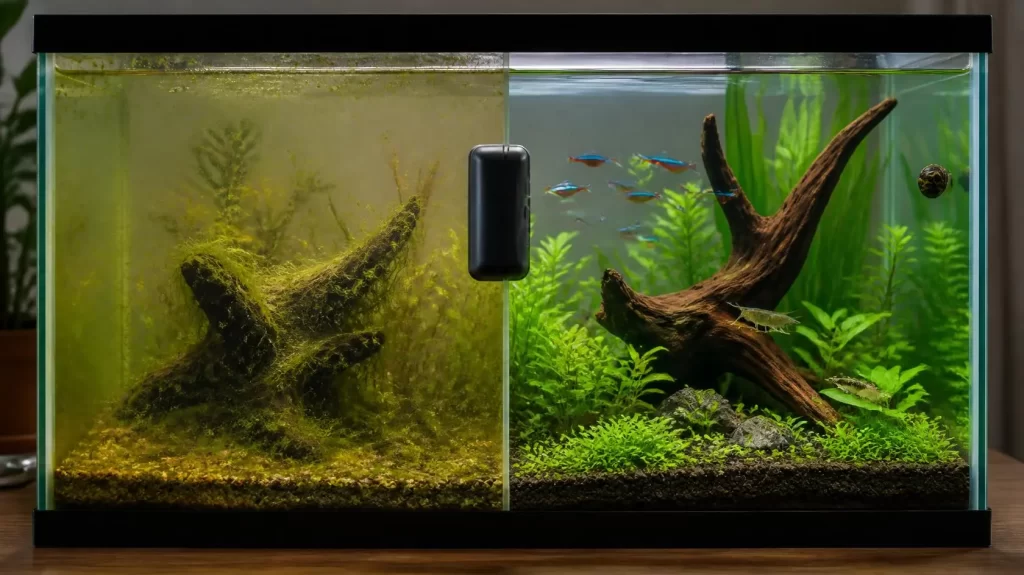
Few things ruin a beautiful aquarium faster than a coat of algae on the glass, plants, and decorations. If you’re wondering how to get rid of brown and green algae in an aquarium, the answer is to fix the imbalance that feeds it, not just scrub it away. Algae thrives on excess light, extra nutrients, and unstable water.
This guide shows you how to identify brown and green algae, what causes each, and the exact steps to remove them. You’ll also learn which algae eaters actually help and how to stop algae from coming back.
Quick Answer: How to Get Rid of Algae in an Aquarium
To get rid of brown and green algae in an aquarium:
- Scrub algae off the glass, decor, and plant leaves.
- Do a 25 to 30% water change and vacuum the gravel.
- Cut lighting to 6 to 8 hours a day on a timer.
- Reduce feeding to what fish eat in 1 to 2 minutes.
- Test for nitrate and phosphate, and keep them low.
- Add live plants and suitable algae eaters.
- Keep the tank out of direct sunlight.
Brown algae (diatoms) usually clears on its own in new tanks within 2 to 6 weeks. Green algae needs ongoing control of light and nutrients.
Brown Algae vs Green Algae: How to Tell Them Apart
Identifying the algae is the first step, because each type has a different cause and fix.
| Algae type | Looks like | Where it grows | Common cause | Difficulty to remove |
|---|---|---|---|---|
| Brown algae (diatoms) | Dusty brown film that wipes off easily | Glass, gravel, decor, plant leaves | New tank, silicates, low light | Easy |
| Green spot algae | Hard, round green dots | Glass, slow-growing plant leaves | Low phosphate, strong light | Moderate |
| Green dust algae | Soft green film on glass | Glass walls | Excess light, nutrient swings | Easy to moderate |
| Green hair or thread algae | Long green strands | Plants, decor, filter intake | Excess nutrients, too much light | Moderate |
| Green water (algae bloom) | Pea-soup cloudy water | Free-floating in the water | Sunlight, high nitrate and phosphate | Moderate |
What Is Brown Algae?
Brown algae in a fish tank is not true algae. It’s made of diatoms, single-celled organisms with silica shells. Diatoms are common in newly set-up tanks and usually fade once the tank matures.
What Is Green Algae?
Green algae is true algae and the most common type in home aquariums. A little on rocks or the back glass is a sign of a healthy tank. Rapid growth signals too much light or too many nutrients.
What Causes Brown and Green Algae in an Aquarium?
Algae grows when light and nutrients are out of balance with what plants and filtration can use. These are the main causes.
Too Much Light
Lights left on for 10 to 12+ hours, or a tank in direct sunlight, give algae extra energy. This is the top cause of green algae and green water.
Excess Nutrients (Nitrate and Phosphate)
Overfeeding, overstocking, and skipped water changes raise nitrate and phosphate. Algae uses these as fertilizer.
New Tank Syndrome
Fresh tanks have unstable chemistry and few nutrient-hungry plants. Diatoms often appear in the first 1 to 3 months.
Silicates in Tap Water or Substrate
Diatoms build their shells from silica. Tap water, some sands, and certain substrates release silicates that feed brown algae.
Low Light (Brown Algae)
Unlike green algae, diatoms can thrive in dim tanks. Weak or aging bulbs can encourage brown algae.
Poor Water Circulation
Dead spots with little flow let waste settle and algae take hold on decor and plants.
How to Get Rid of Brown Algae (Diatoms): Step by Step
Brown algae is the easiest to beat. In most tanks, these steps clear it within a few weeks.
- Wipe it away. Use an algae scraper or magnetic cleaner on the glass. Diatoms come off with almost no effort.
- Clean plant leaves gently. Rub leaves between your fingers or with a soft toothbrush while they’re underwater.
- Vacuum the substrate. Siphon brown dust from gravel or sand during a 25 to 30% water change.
- Rinse decorations. Scrub rocks and ornaments in old tank water, never with soap.
- Check your water source. If tap water is high in silicates, use RO (reverse osmosis) water or a silicate-removing filter pad.
- Improve lighting. Replace old bulbs and give the tank a consistent 7 to 8 hours of good-quality light.
- Add diatom eaters. Otocinclus catfish and nerite snails clean diatoms quickly and safely.
- Be patient. In new tanks, diatoms usually disappear once the tank cycles and stabilizes, often in 2 to 6 weeks.
How to Get Rid of Green Algae in an Aquarium
Green algae takes more effort because it signals a lasting imbalance. Start with these core steps, then use the fix for your specific type.
Core Steps for All Green Algae
- Reduce light. Set lights on a timer for 6 to 8 hours a day and move the tank away from windows.
- Cut feeding. Feed once a day, only what fish eat in 1 to 2 minutes.
- Do regular water changes. Change 25 to 30% weekly until algae is under control.
- Test water. Aim for nitrate below 20 ppm and phosphate below 0.5 ppm.
- Add fast-growing plants. Hornwort, water sprite, and floating plants like frogbit outcompete algae for nutrients.
- Clean the filter. Rinse filter media in old tank water to remove trapped waste without killing good bacteria.
Green Spot Algae
Scrape spots off the glass with a razor blade scraper (plastic for acrylic tanks). Remove badly affected plant leaves. Check that phosphate isn’t too low in planted tanks, and reduce light intensity.
Green Dust Algae
Wipe the glass, but consider leaving it alone for 1 to 2 weeks. It often forms a film that peels off easily once mature. Then do a large water change to remove floating spores.
Green Hair or Thread Algae
Twirl strands around a toothbrush or skewer and pull them out. Lower light and nutrients, and add Amano shrimp, which graze on hair algae. For stubborn cases, spot-treat with a liquid carbon product, following the label dose.
Green Water (Algae Bloom)
Green water won’t clear with water changes alone, because the algae regrows fast. The most effective fixes are:
- UV sterilizer: Clears green water in 3 to 7 days by killing free-floating algae.
- Blackout: Cover the tank completely for 3 to 4 days with no light, then do a 50% water change.
- Fix the cause: Remove sunlight and reduce feeding so it doesn’t return.
Best Algae Eaters for Brown and Green Algae
Algae eaters help keep algae in check, but they won’t fix the root cause. Pick ones that match your tank size and algae type.
| Algae eater | Eats | Min tank size | Notes |
|---|---|---|---|
| Nerite snail | Brown diatoms, green dust, green spot | 5 gal | Won’t breed in freshwater; lays white eggs on decor |
| Otocinclus catfish | Brown diatoms, soft green film | 10 gal | Keep in groups of 3+; needs a mature tank |
| Amano shrimp | Hair algae, soft green algae, diatoms | 10 gal | One of the best hair algae eaters |
| Cherry shrimp | Diatoms, soft film algae, biofilm | 5 gal | Great cleanup crew for nano tanks |
| Bristlenose pleco | Brown and green film algae | 30 gal | Stays around 5 in; avoid common plecos |
| Siamese algae eater | Hair algae, black beard algae | 30 gal | Active; grows to 6 in |
| Daphnia (live) | Green water | Any | Filters free-floating algae; often eaten by fish |
Tip: Algae eaters still need food. Supplement with algae wafers or blanched zucchini once the algae is gone.
How to Prevent Algae from Coming Back
Once your tank is clean, a simple routine keeps algae from returning.
- Use a light timer. A consistent 6 to 8 hour photoperiod is the single most effective prevention step.
- Feed lightly. Uneaten food breaks down into nitrate and phosphate.
- Change water weekly. Replace 20 to 25% every week to remove excess nutrients.
- Keep plenty of live plants. Healthy plants absorb nutrients before algae can use them.
- Avoid direct sunlight. Even an hour of sun a day can trigger green water.
- Don’t overstock. More fish means more waste and more algae fuel.
- Maintain the filter. Clean media monthly in tank water, and replace mechanical pads as needed.
- Test water every 1 to 2 weeks. Catch rising nitrate or phosphate before algae does.
Common Mistakes to Avoid When Removing Algae
- Overdosing algaecides. Chemical algae killers can harm fish, shrimp, snails, and plants. Dead algae also releases nutrients and can crash oxygen levels.
- Deep-cleaning everything at once. Scrubbing the filter, gravel, and decor on the same day can wipe out beneficial bacteria and cause an ammonia spike.
- Relying only on algae eaters. They manage symptoms but don’t fix excess light or nutrients.
- Buying a common pleco for a small tank. It can grow to 24 inches and produce more waste than it removes.
- Turning lights off and on randomly. Inconsistent lighting stresses plants and gives algae an advantage.
- Using soap or household cleaners. Even small residues are toxic to fish.
Frequently Asked Questions
Is brown algae harmful to fish?
No. Brown algae (diatoms) is harmless to fish and is often eaten by snails and shrimp. It’s mainly a cosmetic issue, though heavy growth can block light from plants.
Why does my new tank have brown algae?
New tanks often have silicates, unstable nutrients, and few established plants. Diatoms take advantage of this and usually disappear as the tank matures over 2 to 6 weeks.
Is green algae good for an aquarium?
A small amount is natural and shows the tank can support life. It also provides grazing for fish and shrimp. Only fast, heavy growth needs action.
How long should aquarium lights be on to prevent algae?
Most aquariums do best with 6 to 8 hours of light per day. Planted tanks may need up to 8 to 10 hours with balanced fertilizer.
Can I use vinegar or hydrogen peroxide to remove algae?
You can soak decor in diluted vinegar outside the tank, then rinse well. Hydrogen peroxide can spot-treat algae, but dosing it in a tank with fish carries real risk, so research carefully or avoid it.
How do I get rid of green water fast?
A UV sterilizer is the fastest and most reliable fix, often clearing water in under a week. A 3 to 4 day blackout followed by a large water change also works.
Conclusion: Keep Your Aquarium Algae-Free
Learning how to get rid of brown and green algae in an aquarium comes down to balance. Brown algae usually fades as a tank matures, while green algae needs control of light, feeding, and nutrients.
Scrub what you can see, fix the cause, and add plants and algae eaters for long-term support. With a steady routine, your tank will stay clear and healthy. Have an algae problem that won’t go away? Share it in the comments, and check out our guide to the best fish for a 10 gallon tank.