Best Aquarium Filter: Sponge vs Hang-On-Back (HOB) vs Canister
Filter is the main thing for your aquarium. It helps to remove fish waste, keep the water clear and clean, and increase beneficial bacteria that break down or reduce toxic ammonia in the aquarium. In the market, there are a number of options, and it can feel confusing.
We are comparing all 3 filters side by side: cost, noise, maintenance, and the tank size that suits each filter best for the aquarium. At the end of the article, we will know the exact filters for the aquarium tank, fish, and budget.
Which Aquarium Filter Should You Choose?
The best aquarium filter depends on the tank and fish size:
- Sponge Filter: Tanks under 20 gallons that have small varieties like shrimp, fry, and bettas. Much cheaper, easy to manage, and safe.
- Hang-On-Back (HOB) Filter: For beginners with tanks under 60 gallons. Easy to set up and maintain.
- Canister Filter: Best for tanks of 60 gallons or more, with more fish varieties, plants, or if you are an aquascaper like me. Quiet and more powerful.
Aquarium Filtration Stages
Before comparing the filters, first know what a filter actually does. The best filters handle all stages.
Mechanical
It holds visible debris like uneaten food, fish waste, and rotten or broken plant pieces. Mechanical filters use sponges, floss, or filter pads.
Biological
The most important stage. Beneficial bacteria in the tank or in the filter media help to convert ammonia and nitrite into nitrate. Ceramic rings, bio-balls, and sponges all hold these bacteria.
Chemical
It is used to remove bad smells, discoloration, and medications. We can use this in both freshwater and saltwater aquariums.
Sponge Filter: Easy to Manage and Cheap
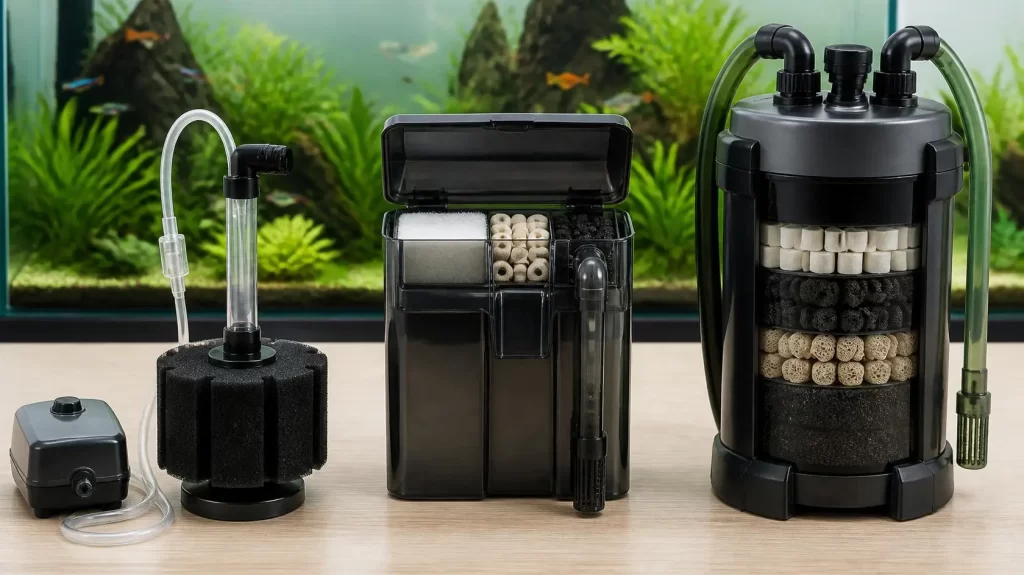
It’s a foam block in any design, connected to an air pump with a pipe. It blows bubbles and sucks water through the sponge. This helps trap food and fish waste and grow beneficial bacteria.
Pros
- Cheap
- Gentle for fry and small or slow-swimming fish
- Good biological filtration
- More oxygen
Cons
- Takes up space in the aquarium tank
- Not suitable for large fish species
- No space for chemical media
- The air pump may start making noise after a few months
Best for: Nano tanks, betta tanks, and shrimp tanks.
Hang-On-Back (HOB) Filter: Suitable for All Tanks
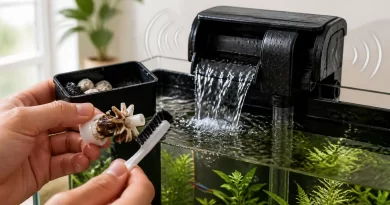
It hangs on the back of the aquarium glass or tank. A motor pulls water through a tube or pipe and pushes it through the filter media. Then, it returns the water to the aquarium in a waterfall style.
Pros
- Affordable
- Easy to install
- Media can be changed easily from the top without disturbing the aquarium
- Mechanical, biological, and chemical filtration
Cons
- The waterfall makes noise if the water level decreases
- Needs space behind and above the tank
- Strong intake and not suitable for small fish species
- Less media capacity compared to a canister filter
Best for: Beginners and community tanks, especially those with fish like tetras, guppies, and Corydoras.
Canister Filter: More Power, Larger Tanks
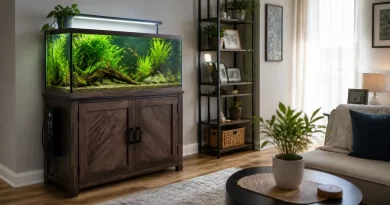
It’s a sealed container that sits under the tank, usually inside the stand or cupboard. Hoses carry water down to the canister through several types of media and push the water back into the aquarium tank.
Pros
- Large media capacity for strong biological filtration
- Quiet, with the motor hidden in the cabinet
- Each media tray is customizable
- Clean and hidden appearance
Cons
- Expensive
- Complex setup
- Takes more time to clean a messy tank
- Can leak if seals or hoses are not maintained
Best for: Large fish like cichlids and goldfish, and high-end planted aquascapes.
Sponge vs Hang-On-Back vs Canister Filter: Comparison
| Feature | Sponge filter | HOB filter | Canister filter |
|---|---|---|---|
| Typical price | $15–$35 | $25–$65 | $85–$350+ |
| Best tank size | Up to 25 gal | 15–65 gal | 70 gal and up |
| Flow | Gentle | Adjustable | Strong |
| Mechanical filtration | Fair | Good | Excellent |
| Biological filtration | Excellent | Good | Excellent |
| Chemical filtration | No | Yes | Yes |
| Noise | Pump and bubbles | Moderate | Low |
| Setup difficulty | Easy | Easy | Hard |
| Maintenance | Every 2–4 weeks | Every 2–4 weeks | Every 1–3 months |
| Shrimp and fry safe | Yes | No | No |
| Visible in tank | Yes | Intake tube | Intake and outlet |
How to Choose the Best Aquarium Filter for Your Aquarium Tank
1. Match Filter with Aquarium Tank Size
Check the filter’s rated tank size. If you are confused, choose a filter that is suitable for a larger tank than your existing one. It will work more powerfully and be more suitable for your fish.
2. Calculate the Water Rotation Flow
Always measure the flow rate in gallons per hour (GPH). The best rule is to turn over your water at least 10 times per hour.
| Tank size | Recommended flow rate |
|---|---|
| 10-20 gallons | 50–60 GPH |
| 20-30 gallons | 90–130 GPH |
| 30-40 gallons | 140–185 GPH |
| 40-50 gallons | 190–250 GPH |
| 50-60 gallons | 260–340 GPH |
| 60-70+ gallons | 350–460 GPH |
Cichlids, goldfish, and large fish benefit from higher water turnover rates, around 10–15 times per hour.
3. Fish
Small fish and long-finned fish prefer low to gentle water flow. A sponge filter or an HOB filter with adjustable flow works best in these types of aquariums. Goldfish and cichlids are heavy eaters and messy, so they need strong filtration, such as an HOB or canister filter.
4. Noise
If you are planning to keep fish in your bedroom or office, then the canister filter is the quietest. A sponge filter is also good, but for smaller aquarium tank setups.
Conclusion: Best Aquarium Filter for Your Aquarium Tank
Choose an aquarium filter based on the tank size and fish. A sponge filter is suitable for small and gentle fish. A hang-on-back filter is easy to use and suitable for most common fish species. A canister filter is suitable for large aquariums and fish or for planted aquariums.