Where to Put a Fish Tank: Best Locations and Safety Rules
Choosing where to put a fish tank is one of the most important decisions you’ll make as an aquarium owner, and one of the hardest to undo. A filled tank weighs about 10 pounds per gallon, so moving it later means draining it completely. The wrong spot can cause algae blooms, temperature swings, stressed fish, or even floor damage.
This guide covers the best rooms and spots for an aquarium, places to avoid, essential safety rules for weight and electricity, and popular Vastu and Feng Shui placement tips.
Quick Answer: The Ideal Spot for a Fish Tank
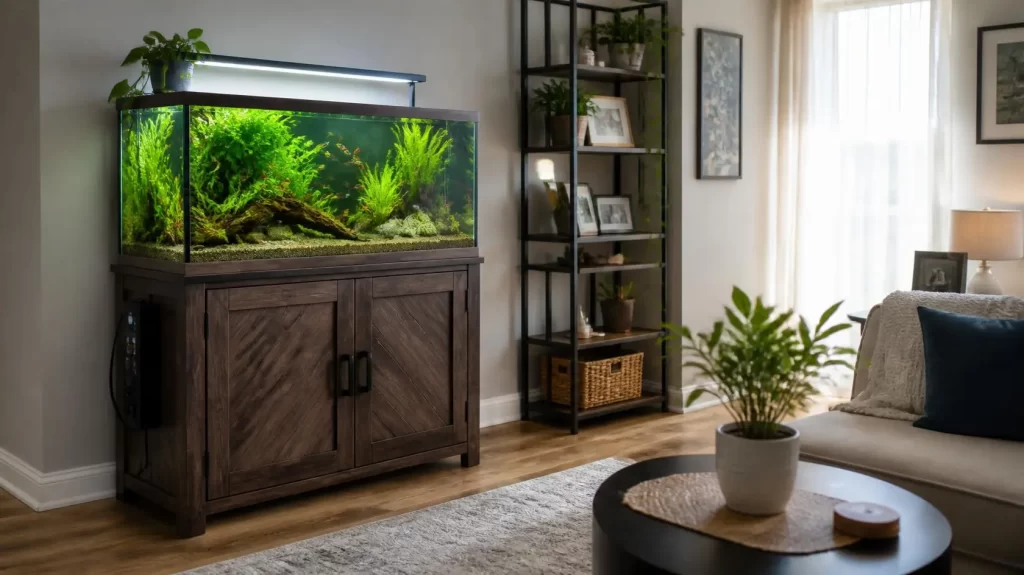
The best place to put a fish tank is a level, sturdy spot along a load-bearing wall, away from direct sunlight, heat sources, drafts, and heavy foot traffic. It should be near a power outlet and within easy reach of water for maintenance.
- Out of direct sunlight
- Away from heaters, AC vents, and doors
- On a level, strong floor, ideally against a load-bearing wall
- Near an electrical outlet, but protected from splashes
- Easy to reach for water changes
- Somewhere you’ll see and enjoy it every day
Best Places to Put a Fish Tank at Home (Room by Room)
| Room | Rating | Why |
|---|---|---|
| Living room | Excellent | Most viewing time, stable temperature, often has strong floors and wall space |
| Home office or study | Very good | Calming focal point, low foot traffic, steady temperature |
| Bedroom | Good | Relaxing, but filter and air pump noise can disturb sleep |
| Dining area | Good | Pleasant centerpiece, as long as it’s away from kitchen heat and fumes |
| Hallway or entryway | Fair | Makes an impression but often has drafts and heavy foot traffic |
| Kids’ room | Fair | Educational, but needs a secure lid and adult supervision |
| Kitchen | Poor | Grease, fumes, heat, and temperature swings |
| Bathroom | Avoid | Humidity, cleaning chemicals, and aerosol sprays |
Living Room
The living room is the most popular choice. Place the tank on an inside wall, away from windows and the TV, so heat and vibration don’t affect it. A spot visible from the sofa makes it a natural focal point.
Home Office or Study
An aquarium in a workspace can help reduce stress and adds a calming view. Keep it away from computer equipment in case of splashes.
Bedroom
A bedroom works well if you choose a quiet filter, such as a canister or a sponge filter with a quiet air pump. Set the light on a timer so it doesn’t keep you awake.
Where Not to Put a Fish Tank
Near a Window or in Direct Sunlight
Sunlight is the top cause of green water and algae outbreaks. It also heats the water unevenly and can raise the temperature several degrees in an afternoon.
Next to Heaters, Radiators, AC Units, or Fireplaces
Heat sources and cold air cause rapid temperature swings that stress fish and weaken their immune systems.
Beside Doors or in Busy Walkways
Constant movement startles fish, and drafts from doors change the water temperature. A busy path also raises the risk of someone bumping the tank.
Near Speakers, TVs, or Washing Machines
Vibration and loud sound travel through water and can stress fish.
In the Kitchen
Cooking fumes, grease, and aerosol sprays can enter the water and harm fish.
On Weak or Uneven Surfaces
Never place a tank on a dresser, bookshelf, or desk not rated for the weight. Uneven support can crack the glass or burst a seam.
Fish Tank Safety Rules: Weight, Floor, Stand, and Electricity
1. Use a Proper Aquarium Stand
Always use a stand built for aquariums or a piece of furniture rated for the full weight. The stand must support the entire bottom frame of the tank evenly.
2. Make Sure the Surface Is Level
Check both directions with a spirit level before filling. Even a small tilt puts uneven pressure on the seams. Use a leveling mat under rimless tanks.
3. Check Your Floor Strength
Most modern floors can handle tanks up to 55 gallons. For tanks of 75 gallons or more, place the tank against a load-bearing wall and across the floor joists, not parallel to them. For very large tanks or upper floors, consult a structural engineer.
4. Follow Electrical Safety
- Plug equipment into a GFCI (ground fault) outlet or RCD-protected socket.
- Use a drip loop: let each cord hang below the outlet so water drips off before reaching the plug.
- Mount power strips above the floor and away from splashes.
- Unplug the heater and filter before putting your hands in the tank.
5. Leave Space for Maintenance
Leave at least 4 to 6 inches (10 to 15 cm) behind the tank for filters and hoses, and enough room above it to lift the lid and reach inside.
6. Keep Kids and Pets Safe
Use a secure lid, anchor tall stands to the wall, and keep cords out of reach.
How Much Does a Fish Tank Weigh? (Size Chart)
Water weighs about 8.3 pounds per gallon (1 kg per liter). With glass, substrate, rocks, and equipment, a set-up aquarium weighs roughly 10 to 12 pounds per gallon. Use these approximate figures when choosing a spot.
| Tank size | Approx. filled weight | Placement note |
|---|---|---|
| 5 gal (19 L) | 60 lb (27 kg) | Sturdy desk or shelf rated for the weight |
| 10 gal (38 L) | 110 lb (50 kg) | Strong furniture or a small stand |
| 20 gal (76 L) | 225 lb (100 kg) | Aquarium stand recommended |
| 29 gal (110 L) | 330 lb (150 kg) | Aquarium stand required |
| 40 gal (150 L) | 450 lb (205 kg) | Stand; place near a wall |
| 55 gal (210 L) | 625 lb (285 kg) | Stand; against a load-bearing wall |
| 75 gal (285 L) | 850 lb (385 kg) | Load-bearing wall, across floor joists |
| 125 gal (475 L) | 1,400 lb (635 kg) | Consult a structural engineer |
Fish Tank Placement According to Vastu and Feng Shui
Many people also consider traditional design principles when deciding where to put a fish tank. These are cultural beliefs rather than scientific rules, so always combine them with the safety and fish-care guidelines above.
Vastu Shastra Tips
- Best directions: North, east, or north-east of the living room are traditionally considered favorable for an aquarium.
- Avoid: The bedroom and kitchen are generally not recommended in Vastu.
- Fish count: Many followers prefer 9 fish, often 8 gold or red fish and 1 black fish.
- Keep it clean: Clear, flowing water is seen as essential; a dirty tank is considered unlucky.
Feng Shui Tips
- Best areas: The north (career), south-east (wealth), and east (family) areas of a home or room.
- Near the entrance: A tank near the front door, facing inward, is believed to invite positive energy.
- Avoid: Placing a tank directly opposite the main door, in the bedroom, or in the kitchen.
Fish Tank Placement Checklist (Before You Fill)
Run through this list before adding water. Once the tank is full, moving it means draining it completely.
- The spot gets no direct sunlight at any time of day
- It’s at least 3 feet (1 m) from heaters, AC vents, and exterior doors
- The stand is rated for the tank’s full weight
- The surface is level in both directions
- The floor can support the weight, ideally near a load-bearing wall
- A GFCI or RCD-protected outlet is within reach
- There’s 4 to 6 inches of space behind the tank for equipment
- There’s room above to open the lid and reach inside
- A water source is close enough for easy water changes
- You can see and enjoy the tank from where you spend time
Frequently Asked Questions
Where is the best place to put a fish tank in a house?
The living room is usually best. Choose an inside wall away from windows, heaters, and doors, on a level floor near an outlet.
Can I put a fish tank near a window?
It’s best to avoid it. Direct sunlight causes algae growth and temperature swings. If you must, use blinds or curtains to block direct sun.
Is it okay to keep a fish tank in the bedroom?
Yes, if you use a quiet filter and set the light on a timer. Some people find the gentle sound relaxing, while others find it disturbing.
Can my floor hold a 55 gallon fish tank?
Most modern floors can support a 55 gallon tank (about 625 pounds) if it’s on a proper stand near a load-bearing wall. For older homes or upper floors, check with a professional.
Can I put a fish tank on a regular table or dresser?
Only small tanks of 5 to 10 gallons, and only if the furniture is sturdy and level. Larger tanks need a purpose-built aquarium stand.
Which direction is best for a fish tank according to Vastu?
In Vastu, the north, east, or north-east of the living room is traditionally considered the best direction for an aquarium.
Conclusion: Choose the Right Spot Once
Knowing where to put a fish tank saves you from algae, stressed fish, and costly accidents. Pick a level, sturdy spot away from sunlight, heat, and traffic, close to power and water, and always use a stand rated for the full weight.
Take a few minutes to run through the checklist before you fill the tank. Have a tricky spot in mind? Share it in the comments, and read our guide on how to choose the best aquarium filter for your new setup.