Aquarium Filter Making Loud Noise? 10 Causes and How to Fix Them
A healthy aquarium should be close to silent. If your aquarium filter is making loud noise, such as rattling, buzzing, grinding, or gurgling, it’s telling you something is wrong. In most cases, the fix is quick and free: a dirty impeller, trapped air, or low water level.
This guide helps you identify the sound, find the cause, and fix it step by step. It covers hang-on-back (HOB), canister, internal, and sponge filters, plus tips to keep your filter quiet for good.
Quick Diagnosis: What Your Filter Noise Means
Match the sound you hear to its most likely cause and fix.
| Sound | Most likely cause | Quick fix |
|---|---|---|
| Rattling or clicking | Dirty, loose, or worn impeller | Clean or replace the impeller |
| Grinding | Debris or sand in the impeller well | Remove and clean the impeller well |
| Loud humming or buzzing | Vibration against tank or stand, or worn motor | Add a rubber pad; check motor |
| Gurgling or bubbling | Trapped air or low water level | Top off water; burp the filter |
| Splashing or trickling | Water falling from outflow | Raise water level; angle outflow |
| Sucking or slurping | Blocked intake or clogged media | Clean intake sponge and media |
| Squealing | Dry or damaged shaft or bearing | Replace impeller shaft |
| Intermittent noise | Air pockets or uneven flow | Prime the filter and check seals |
10 Common Causes of a Loud Aquarium Filter (and How to Fix Each)
1. Dirty or Clogged Impeller
The impeller is the spinning magnet that moves water through the filter. Gunk, algae, and snail shells build up around it and cause rattling or clicking.
Fix: Unplug the filter, remove the impeller, and clean it and its well with a soft brush. See the step-by-step guide below.
2. Worn or Broken Impeller
Impellers wear out after 1 to 3 years. Chipped blades or a loose magnet create a constant rattle even after cleaning.
Fix: Buy a replacement impeller for your filter model. It’s usually cheap and takes minutes to install.
3. Low Water Level
In a HOB filter, water evaporates and the intake starts sucking air. The water also drops further from the outflow, causing loud splashing.
Fix: Top off the tank to about 1 inch (2.5 cm) below the filter lip. Check the level every few days.
4. Trapped Air
Air bubbles inside the filter body or hoses cause gurgling and uneven flow. This is very common after cleaning or setting up a canister.
Fix: Gently tilt or rock the filter, or prime it with the built-in primer button until bubbles stop.
5. Clogged Intake or Filter Media
When the intake sponge or media is clogged, the pump strains and makes sucking, slurping, or whining sounds.
Fix: Rinse the intake sponge and filter media in old tank water. Never use tap water, which kills beneficial bacteria.
6. Vibration Against the Tank or Stand
A running motor vibrates. If the filter touches glass, a hard stand, or a cabinet wall, it amplifies that hum.
Fix: Place a rubber or foam pad under canister filters, and slip a small piece of foam between a HOB filter and the glass.
7. Sand or Debris in the Impeller Well
Sand and small gravel get pulled into the intake and grind against the impeller.
Fix: Clean the impeller well, and add a pre-filter sponge to the intake to keep debris out.
8. Dry or Damaged Impeller Shaft
The metal or ceramic shaft can wear, bend, or crack, causing a high-pitched squeal.
Fix: Replace the shaft and the rubber bushings that hold it in place.
9. Loose Parts or Lid
A loose lid, media basket, or intake tube can rattle with the water flow.
Fix: Reseat every part firmly and check that the lid clicks fully into place.
10. Old or Failing Motor
If the filter still hums loudly after cleaning and new parts, the motor may be failing.
Fix: Replace the filter before it stops completely and puts your fish at risk.
How to Fix a Noisy Filter by Type
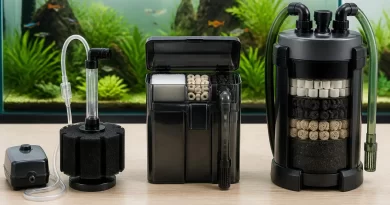
Hang-On-Back (HOB) Filter
HOB filters are the most common source of filter noise. Most problems come from a low water level or a dirty impeller.
- Keep water within 1 inch (2.5 cm) of the filter lip.
- Make sure the filter hangs level, not tilted.
- Clean the impeller every 4 to 6 weeks.
- Add foam between the filter and the glass to stop vibration hum.
Canister Filter
Canister noise is usually caused by trapped air or a worn impeller.
- Prime the canister fully after each cleaning and shake gently to release air.
- Check that hoses aren’t kinked and that the spray bar or outlet sits below the waterline if you want less splashing.
- Inspect the O-ring seal on the lid. Lubricate it with silicone grease if it’s dry, since a bad seal lets air in.
- Place the canister on a rubber mat inside the cabinet.
Internal Filter
Internal filters mostly rattle when suction cups loosen and the unit vibrates against the glass.
- Replace hardened suction cups.
- Clean the impeller and remove trapped snails.
- Position the outlet so it doesn’t break the surface too hard.
Sponge Filter
Sponge filters are driven by an air pump, so the noise usually comes from the pump or bubbles.
- Place the air pump on a soft pad or hang it from a hook.
- Use a check valve and an air valve to fine-tune airflow.
- Swap coarse bubbles for a fine-bubble air stone to reduce popping sounds.
How to Clean an Aquarium Filter Impeller (Step by Step)
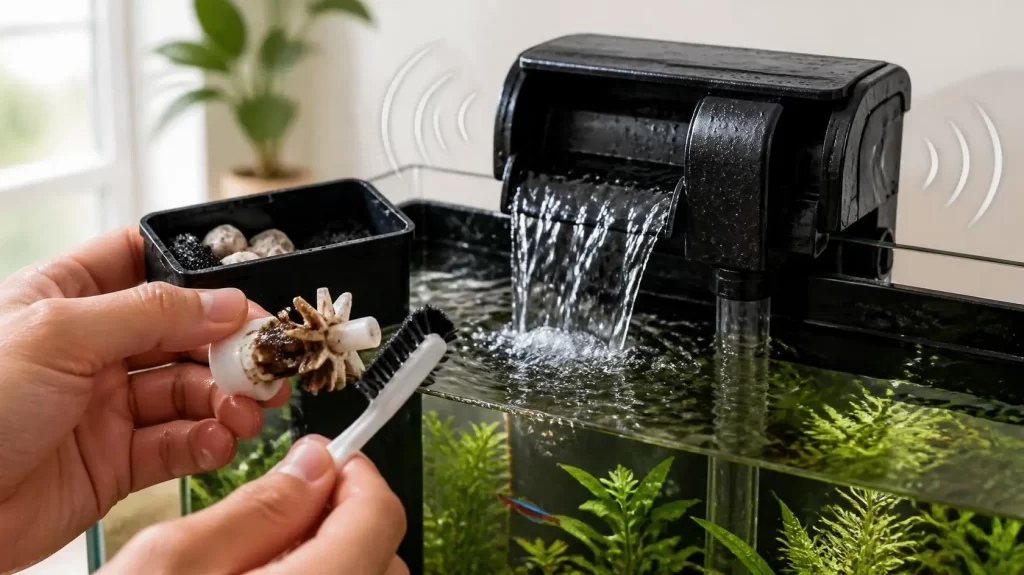
Cleaning the impeller fixes most rattling and grinding noises in 10 to 15 minutes.
- Unplug the filter. Always cut power before reaching into any part of the filter.
- Remove the intake tube. Pull it straight up from the filter body.
- Take out the impeller cover. Twist or pull off the cover at the base of the motor housing.
- Remove the impeller. Pull it out by the blades; it’s held in by a magnet.
- Clean the impeller. Rinse it in tank water and wipe off slime with a soft cloth.
- Clean the impeller well. Use a small pipe brush or cotton swab to remove debris, sand, and snails.
- Inspect for damage. Look for chipped blades, a bent shaft, or worn rubber bushings, and replace as needed.
- Reassemble and restart. Put everything back, refill or prime the filter, and plug it in. Listen for a smooth hum.
How to Keep Your Aquarium Filter Quiet
- Clean the impeller every 4 to 6 weeks. This one habit prevents most filter noise.
- Top off water weekly. Replace evaporated water so the intake never sucks air.
- Use vibration pads. Rubber or foam under and behind the filter absorbs hum.
- Add an intake pre-filter sponge. It blocks sand, snails, and debris from reaching the impeller.
- Rinse media monthly in tank water. Clogged media makes the pump work harder and louder.
- Keep spare parts. A spare impeller and O-ring let you fix problems the same day.
- Choose quiet models. Canister filters and sponge filters with quality air pumps are usually the quietest options for bedrooms.
When to Replace Your Aquarium Filter
Most aquarium filters last 3 to 7 years with good care. Replace yours if:
- The noise continues after cleaning and replacing the impeller.
- Water flow has dropped noticeably even with clean media.
- The motor housing is cracked or leaking.
- The filter gets unusually hot to the touch.
- Replacement parts for your model are no longer sold.
Set up the new filter alongside the old one for 2 to 4 weeks, or move the old media into it. This protects your beneficial bacteria and prevents an ammonia spike.
Frequently Asked Questions
Why is my aquarium filter making loud noise suddenly?
A sudden noise usually means trapped air, a low water level, or debris stuck in the impeller. Top off the water, then unplug and clean the impeller.
Is a noisy filter harmful to fish?
Constant loud vibration can stress some fish. A noisy filter also often signals reduced flow, which can lower water quality over time.
Why is my filter rattling after cleaning?
The impeller may not be seated properly, or air got trapped during cleaning. Reseat the impeller and prime the filter to remove air.
How do I stop my canister filter from gurgling?
Gurgling comes from trapped air. Prime the canister, tilt it gently to release bubbles, and check the lid O-ring and hose connections for leaks.
Why is my HOB filter so loud?
The most common reasons are a low water level causing splashing and a dirty impeller. Keep water near the filter lip and clean the impeller regularly.
What is the quietest aquarium filter type?
Canister filters are generally the quietest because the motor sits in a cabinet. Sponge filters are also quiet if paired with a good air pump on a soft pad.
Conclusion: A Quiet Filter Means a Healthy Tank
An aquarium filter making loud noise is almost always fixable at home. Start with the simple checks: top off the water, release trapped air, and clean the impeller. If the noise continues, replace worn parts or the filter itself.
With regular maintenance, your filter will run smoothly and quietly for years. Still hearing a strange sound? Describe it in the comments, and check out our guide to low light aquarium plants for beginners to make your tank even healthier.